



1. Introduction: Why Material Choice Is a Business Decision
When international buyers source furniture, the choice between solid wood and engineered wood is not primarily an aesthetic one — it is a margin decision, a branding decision, and a compliance decision all at once.
Retailers in the US, UK, Netherlands, and Canada operate in distinct market environments. What sells in a boutique showroom in Toronto differs from what a volume retailer in the Midwest needs. Material selection directly affects landed cost, warranty positioning, customer return rates, and long-term brand perception.
This guide breaks down both material types across the criteria that matter most to procurement managers, brand owners, and wholesale buyers — so you can match your sourcing strategy to your market reality.
2. What Is Solid Wood Furniture?
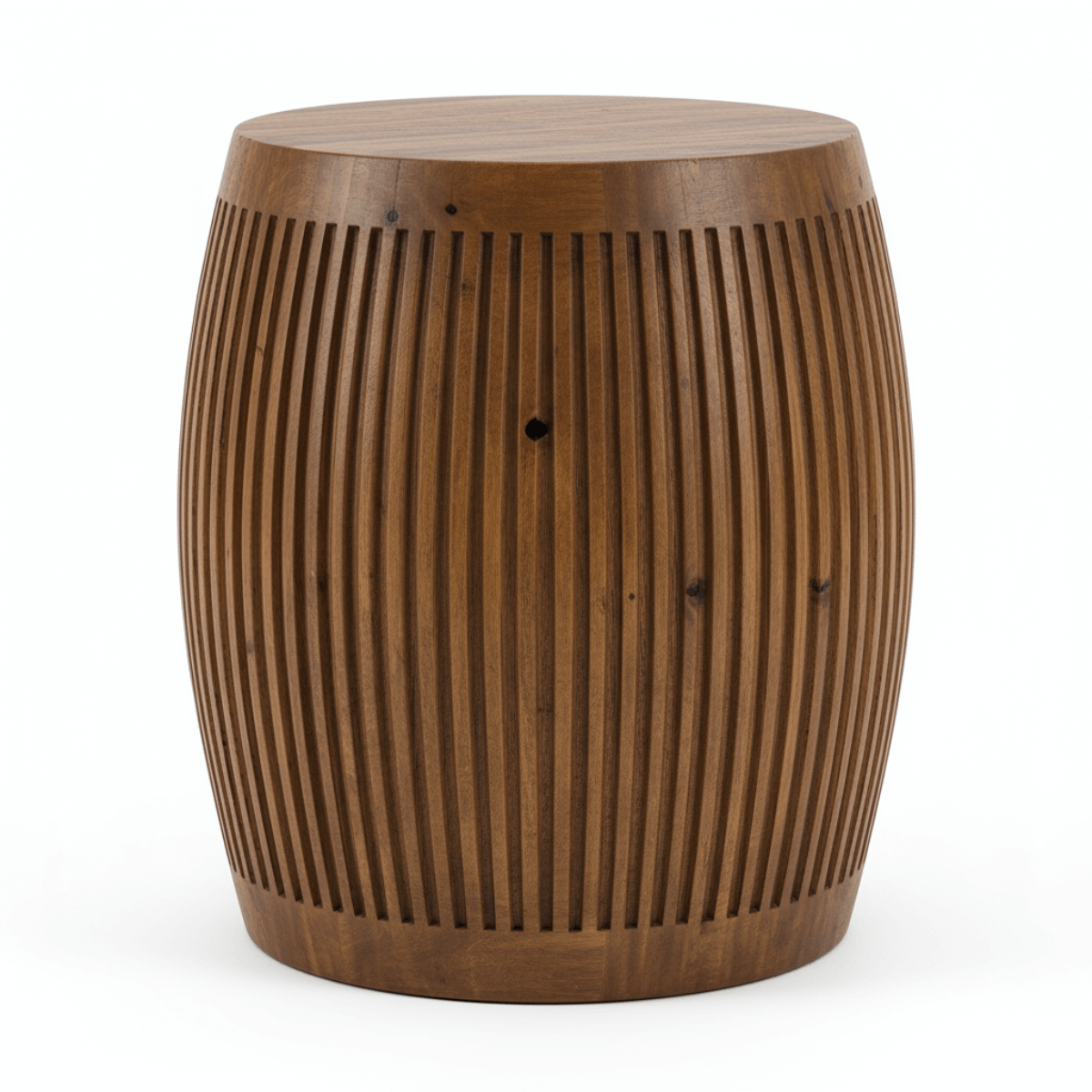
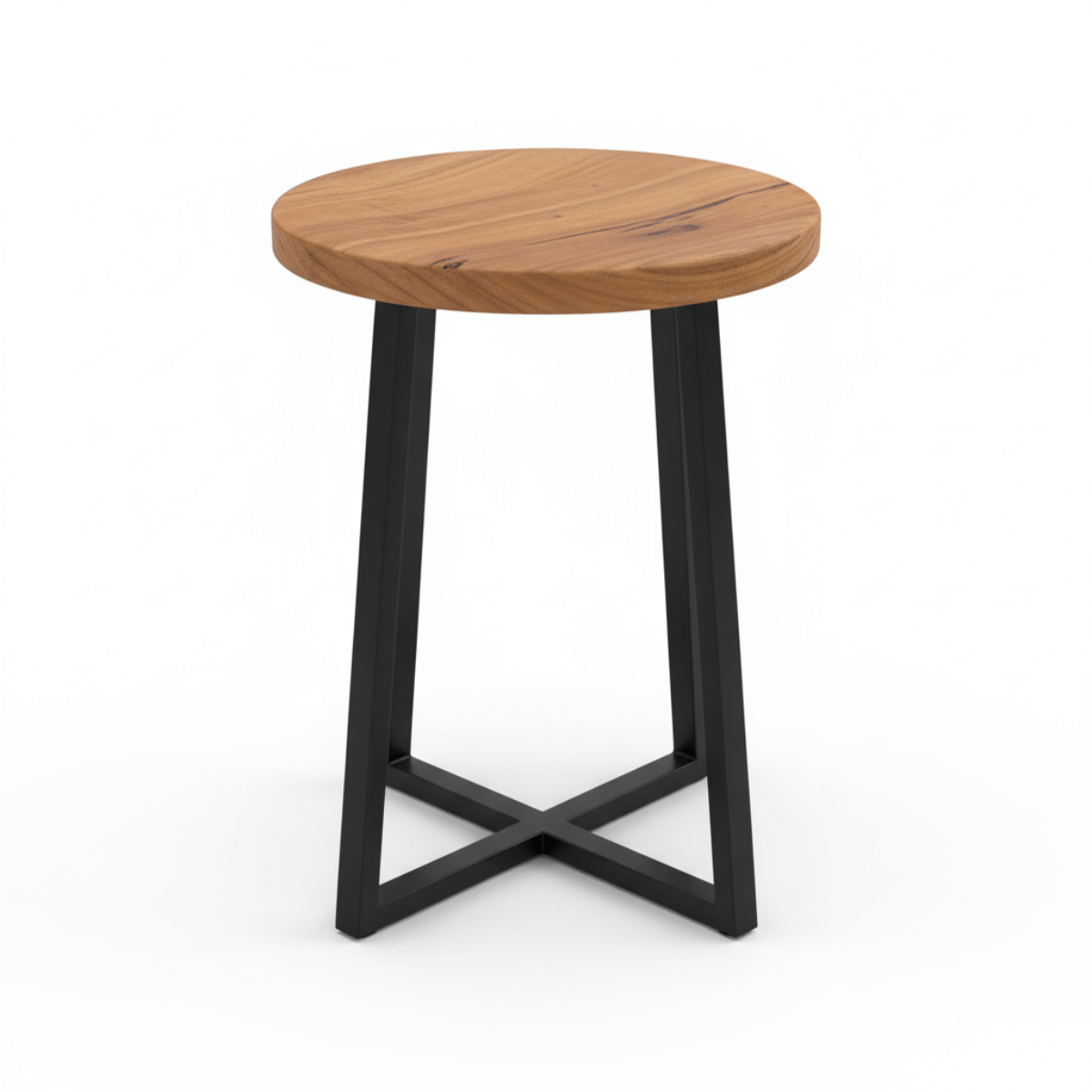
Solid wood furniture is constructed entirely from natural timber — species such as sheesham (Indian rosewood), teak, mango, oak, or acacia. No composite fillers or engineered cores are used in the primary structural components.
Advantages
- Durability: Properly finished solid wood furniture routinely lasts 20–50 years with basic maintenance, reducing replacement cycles for end customers.
- Premium market perception: In Western retail environments, solid wood commands price premiums of 30–60% over comparable engineered alternatives — a direct margin advantage for retailers.
- Resale and secondhand value: Solid wood pieces retain resale value, an increasingly relevant factor in sustainability-conscious markets like the Netherlands and UK.
- Repairability: Scratches, dents, and surface wear can be sanded and refinished — a feature that resonates with quality-conscious buyers.
-
Design versatility: Grain patterns and natural variation support premium storytelling in product listings and showroom displays.
Limitations
- Higher unit cost: Solid wood pieces typically carry a 25–45% higher FOB price compared to MDF or particle board alternatives.
- Weight and shipping costs: Heavier CBM-to-weight ratios increase freight costs, particularly for container loads to North America.
- Humidity sensitivity: Wood movement in high-humidity environments requires proper kiln drying and finishing — a quality control priority for any solid wood furniture manufacturer in India exporting to varied climates.
Market Relevance
Solid wood furniture performs strongest in the US mid-market and premium segments, UK independent retailers and interior design trade, Canadian heritage-style and Scandinavian-influenced retail, and Dutch and wider European markets where natural materials are a key sustainability differentiator.
3. What Is Engineered Wood Furniture?
Engineered wood is a category that includes MDF (medium-density fibreboard), plywood, and particle board — wood-derived materials processed with resins and adhesives to form composite panels. Most flat-pack and ready-to-assemble furniture sold globally falls in this category.
Advantages
- Lower unit cost: Engineered wood products are typically 30–50% cheaper to manufacture, enabling competitive price-point positioning.
- Dimensional stability: Unlike solid wood, engineered panels do not expand or contract significantly with humidity changes, reducing warranty claims related to warping or cracking.
-
Consistency at scale: Uniformity of panel dimensions supports high-volume production with tighter tolerances.
Lighter weight: Lower per-piece weight reduces shipping costs — a meaningful factor for e-commerce and drop-ship retailers.
Limitations
- Perceived lower value: Consumer surveys in the UK and North America consistently show that 'solid wood' is a preferred descriptor and that 'MDF' or 'particle board' reduces perceived quality and willingness to pay.
- Limited lifespan: High-traffic pieces in engineered wood typically require replacement within 5–10 years, increasing customer lifetime replacement cost.
- Formaldehyde and VOC concerns: Lower-grade particle board can off-gas formaldehyde, creating compliance exposure under CARB Phase 2 standards in the US and REACH regulations in the EU.
- Repair limitations: Surface damage is generally not repairable, which affects premium return and resale positioning.
Best Fit
Engineered wood suits large-scale retail chains with high inventory turnover, entry-level product lines, promotional SKUs, and e-commerce sellers where low unit price and standardized packaging are priorities.
4. Cost and Margin Comparison for Retailers
Manufacturing Cost Differential
On a standard dining chair, manufacturing cost in solid wood (sheesham or mango) from India typically runs 35–50% higher than a comparable MDF/particle board design. However, retail pricing gaps are often larger — solid wood pieces sell at 60–100% premiums — which means gross margin percentages can be comparable or better for solid wood lines.
Shipping and Landed Cost
Solid wood furniture is denser. A 20-foot container of solid wood chairs will carry fewer units by volume than engineered alternatives, increasing per-unit freight cost. Buyers targeting the US, UK, and Canada should model landed cost carefully and factor in the higher retail price achievable with solid wood before dismissing it as cost-prohibitive.
Long-Term Brand Positioning
Retailers who build their private label furniture manufacturing programs around solid wood tend to develop stronger brand equity, lower return rates, and better customer retention. Engineered wood is harder to differentiate from mass-market alternatives, creating pricing pressure over time.
A wholesale furniture supplier offering solid wood lines gives retailers a defensible product story — particularly relevant in markets where consumer trust in furniture quality is declining due to fast-furniture saturation.
5. Sustainability and Compliance Considerations
International buyers sourcing from India must ensure their suppliers comply with origin-market regulations on timber and formaldehyde emissions.
FSC Certification and Responsible Sourcing
The Forest Stewardship Council (FSC) certification is increasingly requested by European and North American retailers. While not universally mandatory, FSC or equivalent responsible sourcing documentation reduces compliance risk and supports green product claims. Buyers should verify that their solid wood furniture manufacturer in India can provide timber traceability documentation.
EU Timber Regulation (EUTR) and Corporate Sustainability Due Diligence
Under EUTR and the incoming EU Deforestation Regulation (EUDR), importers into the EU are required to demonstrate due diligence that timber was legally harvested. This applies directly to buyers in the Netherlands and other EU markets. Solid wood sourced from sustainably managed plantations in India — such as sheesham grown on private farmlands — is generally lower-risk under these frameworks than tropical hardwoods from unverified sources.
CARB Phase 2 (US Market)
Engineered wood products exported to the US must comply with CARB Phase 2 formaldehyde emission standards. Non-compliance can result in significant customs and regulatory exposure. Buyers should request CARB compliance certification from any engineered wood supplier.
Consumer Perception
In Western markets, sustainability is increasingly a purchase driver. Natural wood — particularly when sourced responsibly — aligns better with consumer sustainability narratives than synthetic resin composites.
6. What International Buyers Actually Prefer: Market Insights
United States
The US furniture market is segmented. Volume retailers (big-box, e-commerce) lean toward engineered wood for price efficiency. However, mid-market independent retailers, interior designers, and contract buyers in the hospitality sector show consistent demand for durable furniture for retail that is specified as solid wood. Sheesham and mango wood from India have established brand recognition in the US mid-market.
United Kingdom and Europe
UK consumers, particularly in the 35–65 age demographic with higher disposable income, favor solid wood for longevity and aesthetic authenticity. The UK trade press and interior design channels consistently position solid wood as the premium standard. In the Netherlands and broader EU, sustainability credentials make responsibly sourced solid wood a stronger proposition than cost-driven alternatives.
Canada
Canadian demand trends mirror the US in structure but with stronger Scandinavian and natural-material aesthetic influences. Furniture export from India to Canada has grown across both solid and engineered categories, but solid wood commands better retail margins in independent and boutique retail channels.
Boutique vs. Volume Retailers
Boutique retailers and showroom-based sellers almost universally prefer solid wood — it supports higher price points, better in-store presentation, and differentiated brand positioning. Volume retailers and catalogue operations are more price-driven and may split their range across both materials.
7. When to Choose Solid Wood vs. Engineered Wood
Premium Retailers and Showrooms
Solid wood is the clear choice. It supports the product story, justifies the price premium, and reduces return rates. Look for a solid wood furniture manufacturer in India with finishing options that meet Western market expectations for color consistency and surface quality.
Mid-Range Brands
A hybrid approach often works best: solid wood for hero SKUs and visible statement pieces, engineered wood for storage, drawer bases, and secondary SKUs where quality perception is lower-stakes.
Private Label Businesses
Private label furniture manufacturing in solid wood from India offers significant differentiation potential. With the right specifications and branding, Indian-manufactured solid wood pieces can compete directly with Scandinavian and European-branded alternatives at lower cost to the importer. Margin potential for private label operators is strong.
E-Commerce Sellers
Weight and packaging are primary concerns. Engineered wood wins on logistics cost and packaging efficiency. However, solid wood micro-collections — well-photographed and accurately described — can command premium pricing even in e-commerce channels, provided the seller invests in content quality.
Matching Material to Market
The solid wood vs engineered wood decision is not universal — it depends on your market segment, margin targets, brand positioning, and logistics model. What this analysis consistently shows is that solid wood delivers stronger long-term brand value and better margin potential in the premium and mid-premium retail segments that dominate the US, UK, Netherlands, and Canada.
For retailers and importers building sustainable, differentiable product lines, solid wood sourced from India represents one of the most cost-competitive options globally — combining skilled craftsmanship, competitive FOB pricing, and a growing compliance infrastructure.
Pindel Handicraft is a specialist solid wood furniture manufacturer and exporter based in India, producing for international buyers across the US, UK, European, and Canadian markets. We work with retailers, wholesalers, and private label brands on made-to-order production with flexible MOQs and full export documentation support.
Contact Pindel Handicraft to explore solid wood manufacturing options for your market. Request our current catalog or discuss custom sourcing at www.pindelhandicraft.com