



Last updated: 27 October 2026. Written for furniture retailers, wholesalers and interior brands buying mango wood furniture in bulk.
Walk through almost any furniture shop in the Netherlands and you will find mango wood: industrial dining tables with black steel legs, sideboards with a warm honey finish, wine cabinets, desks and TV units. It has become one of the most common solid woods in European furniture retail. Even so, many buyers still have basic questions. Is mango wood strong? Is it a proper hardwood? What are the disadvantages? And how should it be cared for?
We work with mango wood every day in our factory in Jodhpur, India, so this guide gives you the honest answers: the measured properties, the real weaknesses, and what to check before you order a container of mango wood furniture.
|
Mango wood in brief
|
What Is Mango Wood?
Mango wood comes from the same tree that produces mangoes. India is the world's largest mango grower, and the tree is grown across the country in orchards and on farmland. A mango tree gives commercial fruit for several decades. When yields drop, farmers cut the old trees and replant with young ones. That old orchard timber is what furniture makers use.
This supply model is the main reason mango wood became so popular in export furniture. The timber is a by-product of fruit farming rather than of forest logging, it is widely available, and its price is more stable than that of slower-growing hardwoods. The Wood Database notes that mango is not listed by CITES. The IUCN lists it as data deficient because the tree is so widely cultivated.
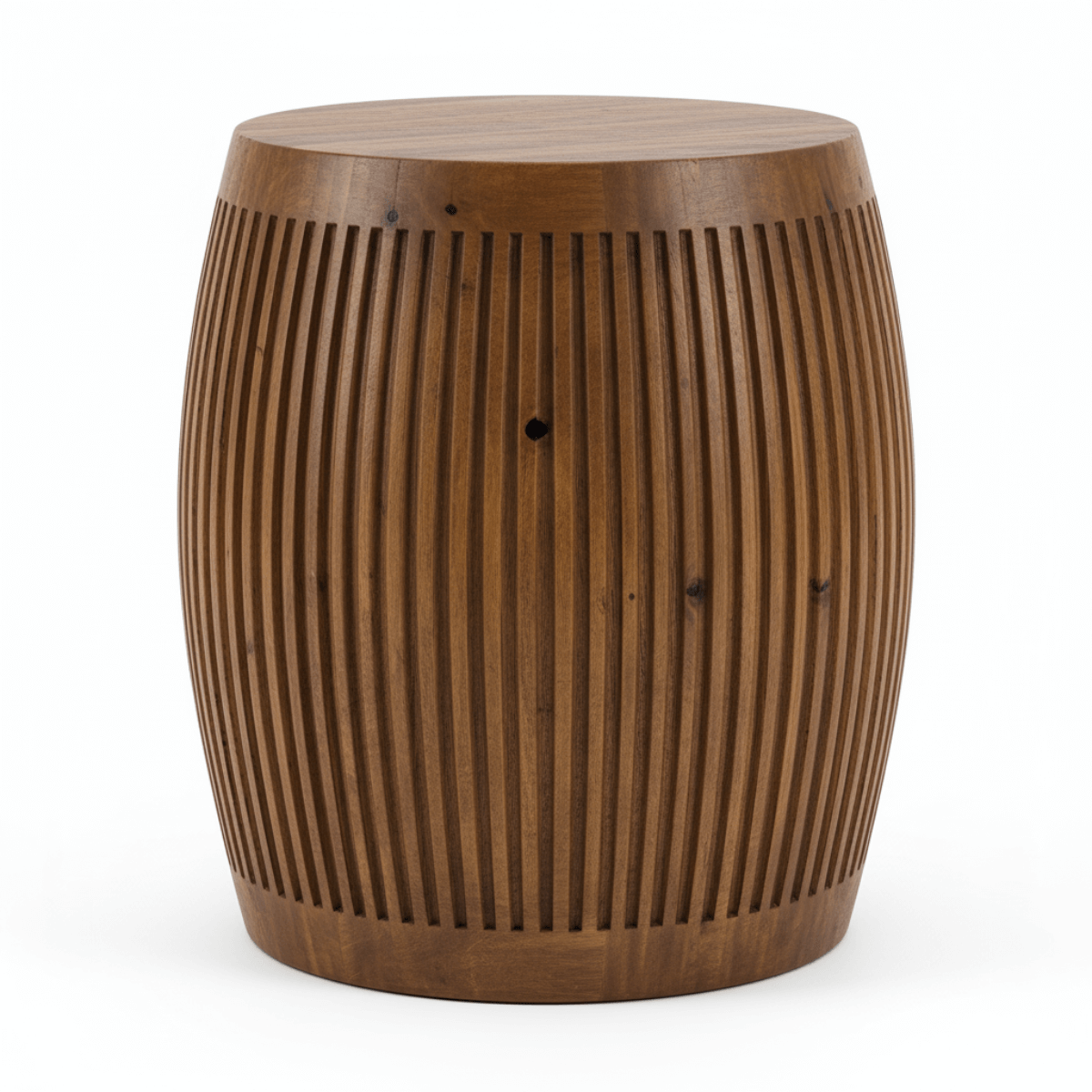
Mango timber has a golden-brown heartwood and a paler sapwood that is not always clearly separated. Many boards show spalting: dark lines and streaks of yellow, pink or black caused by natural fungal activity in the tree. Spalting is a big part of mango wood's look, and buyers either love it or ask for a finish that tones it down.
Mango Wood Properties: The Numbers
The figures below come from The Wood Database for Mangifera indica. Values vary from tree to tree, so treat them as averages rather than guarantees.
| Property | Mango wood |
|---|---|
| Scientific name | Mangifera indica |
| Average dried density | About 675 kg/m³ (range in practice roughly 600–750 kg/m³) |
| Janka hardness | 1,070 lbf (4,780 N) |
| Bending strength (modulus of rupture) | 88.5 MPa |
| Stiffness (elastic modulus) | 11.53 GPa |
| Crushing strength | 49.9 MPa |
| Shrinkage (radial / tangential / volumetric) | 3.6% / 5.5% / 8.9% |
| Grain and texture | Straight or interlocked; medium to coarse texture with natural lustre |
| Natural durability | Moderately durable to perishable; susceptible to fungi and insects |
Is mango wood strong?
Yes, for indoor furniture. Its Janka hardness of about 1,070 lbf puts it in the same range as European oak (about 1,120 lbf) and teak (about 1,155 lbf), and above American black walnut (about 1,010 lbf). It is softer than sheesham (about 1,660 lbf) and beech (about 1,450 lbf). In practice, a well-built mango wood dining table, bed or sideboard is strong enough for daily family use. Hardness affects how easily a surface dents, not whether the furniture is sturdy. Sturdiness depends much more on construction: joinery, thickness of the top and rails, and how the wood was dried.
Is mango wood a hardwood?
Yes. Botanically, every broadleaf tree is a hardwood, and mango is also hard in the everyday sense. It is not a soft wood like pine.
The Advantages of Mango Wood Furniture
- Character: no two pieces look alike. The grain, colour changes and spalting give mango wood furniture a natural, handmade look that suits industrial, Scandinavian, rustic and Japandi interiors.
- Strength for the price: hardness and strength similar to oak, usually at a lower price.
- Finishes well: mango takes oils, stains, lacquers, whitewash and dark finishes well, so one design can be sold in several colours.
- Moderate weight: lighter than sheesham and acacia, which helps with shipping costs and handling in store.
- Reliable supply: timber from end-of-life orchards keeps availability steady, which matters for retailers planning repeat orders.
- A good sustainability story: trees are replanted as part of normal orchard management. For EU importers, mango timber from Indian farmland also fits well with the traceability rules under the EUDR (see our EUDR guide for Dutch furniture importers).
The Disadvantages of Mango Wood (and How to Handle Them)
Every wood has weak points. These are the ones that matter for mango, and what a good manufacturer does about them.
| Disadvantage | What it means | How it is managed |
|---|---|---|
| Insect and fungal risk | Untreated mango wood is attractive to wood-boring beetles and fungi. | Proper kiln drying, which kills larvae and eggs, plus preservative treatment where specified. Ask for drying and treatment records. |
| Not for outdoor use | Mango is not naturally durable outdoors and will degrade in rain and sun. | Sell it as indoor furniture only. For garden furniture, use teak or a suitable acacia. |
| Movement with humidity | Like all solid wood, mango shrinks and swells as humidity changes. Poorly dried wood can crack or warp. | Kiln drying to the right moisture content and construction that allows the wood to move, for example floating table tops. |
| Colour variation | Each batch, and even each board, can look different. | Agree a reference sample, ask for colour-matched tops in a set, and explain natural variation on your product pages. |
| Softer than very hard woods | Dents more easily than sheesham, acacia or beech. | A durable lacquer finish on table tops, and coasters and mats in daily use. |
| Over-spalted wood | Spalting looks good, but advanced fungal decay makes the wood soft. | Reject soft or "punky" boards at the raw material stage. |
| Dust can irritate | Mango sawdust can cause skin irritation in some people during machining. | A workshop issue only; finished furniture is not a concern. |
Most mango wood complaints we hear about, such as cracking, warped tops or beetle holes appearing months later, come down to drying and treatment, not to the species itself. That is why the questions you ask your supplier matter more than the choice of mango versus another wood.
Drying and Moisture Content for the Dutch Climate
Mango wood furniture sold in the Netherlands lives in centrally heated homes. In winter, indoor air can become quite dry, and wood that was not dried enough before production will keep shrinking in the customer's living room. That is when tops crack and joints open.
For heated homes in Northwest Europe, buyers usually specify a moisture content of around 8–10% at the time of production. Ask your supplier to measure and record moisture content on the raw timber and again before assembly, and include a check in your pre-shipment inspection. Our guide to quality control in furniture manufacturing explains where these checks fit in the production process.
Popular Finishes for Mango Wood
- Natural oil or wax: shows the grain best and feels warm to the touch. Needs re-oiling once or twice a year.
- Matte lacquer: the most practical choice for dining and coffee tables. Better protection against stains and water rings.
- Honey and walnut stains: the classic warm look for industrial mango wood and iron furniture.
- Black and dark brown: popular for modern and industrial collections; hides colour variation well.
- Whitewash and grey wash: lighter, Scandinavian-style looks.
For a full overview of finish types, see our guide to matte, glossy and distressed furniture finishes.
How to Care for Mango Wood Furniture
These are the care instructions we recommend retailers pass on to their customers:
- Clean with a soft, slightly damp cloth, then wipe dry. Avoid all-purpose cleaners, bleach and silicone sprays.
- Protect the surface with coasters, placemats and trivets. Wipe up spills straight away.
- Watch the position: keep furniture away from radiators, underfloor heating vents and strong direct sunlight, which can cause cracking and fading.
- Keep humidity steady where possible. Very dry winter air is hard on all solid wood.
- Re-oil oiled finishes once or twice a year with a suitable furniture oil. Lacquered surfaces need only cleaning.
- Repair small marks on oiled surfaces by sanding lightly with fine sandpaper along the grain and re-oiling.
We cover general solid wood care in more detail in how to maintain and clean solid wood furniture.
Mango Wood vs Other Woods
| Wood | Janka hardness (approx.) | Typical position |
|---|---|---|
| Mango | 1,070 lbf | Best value; strong character; indoor use |
| European oak | 1,120 lbf | Classic European choice; usually higher price |
| Teak | 1,155 lbf | Premium; naturally durable, also outdoors |
| Sheesham | 1,660 lbf | Harder and heavier; rich, darker tones |
| Acacia | Varies by species, generally harder than mango | Dense, uniform grain; some species suit outdoor use |
We have written detailed comparisons for buyers choosing between Indian woods: mango wood vs sheesham wood for dining tables and mango wood vs acacia wood for bed frames.
Which Furniture Works Best in Mango Wood?
Mango wood is a strong choice for most indoor furniture categories that European retailers sell:
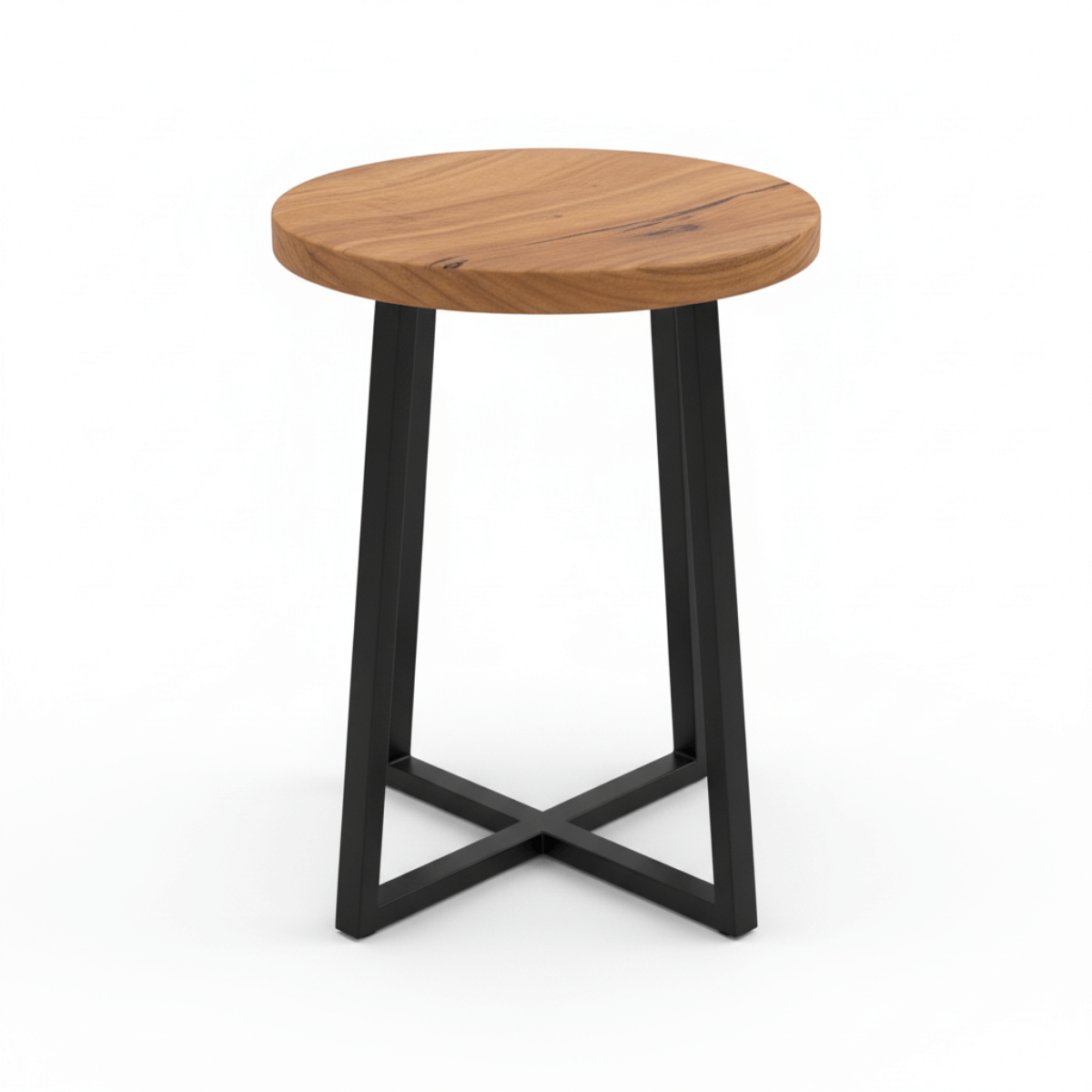
- Dining tables, especially industrial designs with steel bases and lacquered tops
- Sideboards and buffets
- TV units and coffee tables
- Desks, one of the most searched mango wood products in the Netherlands
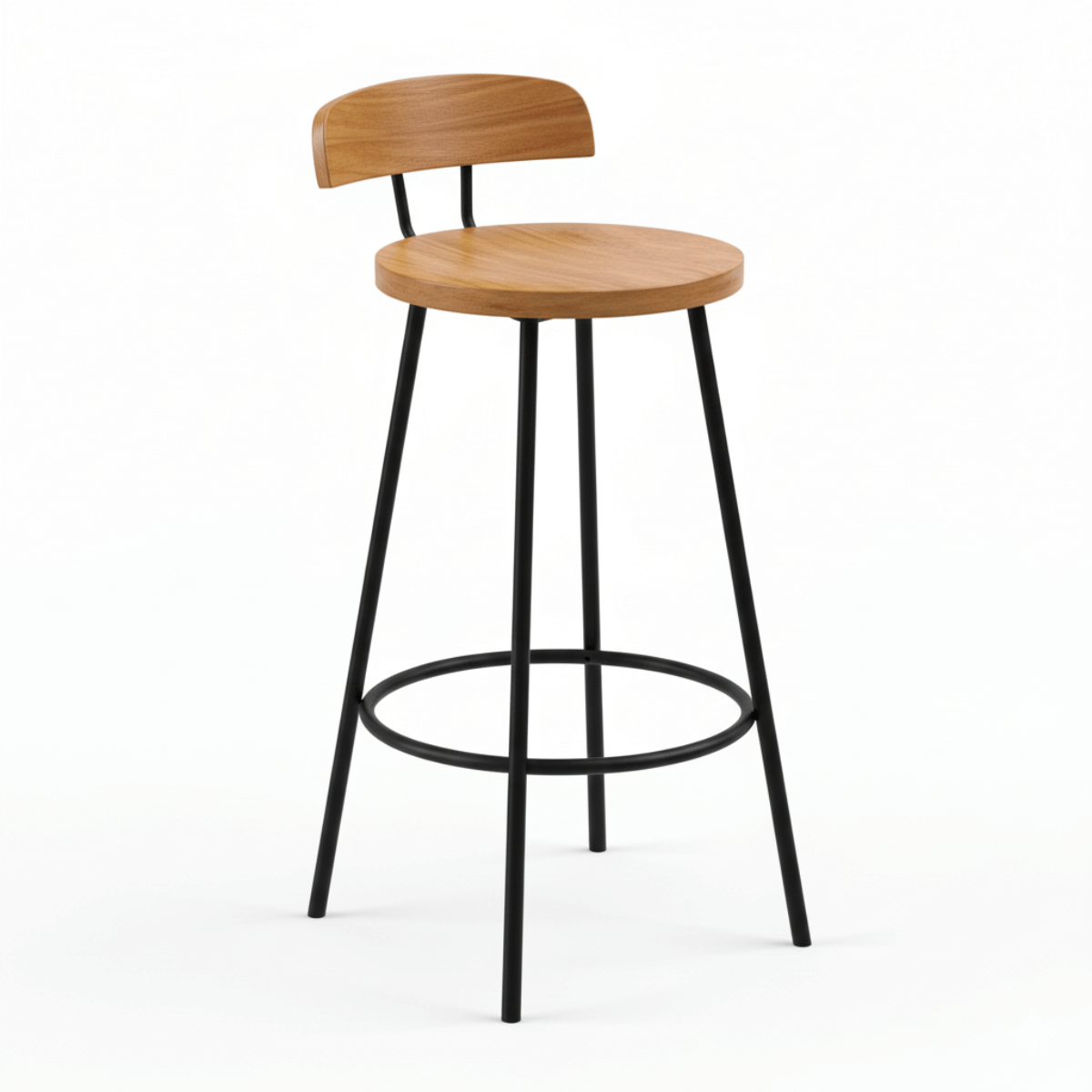
- Wine and bar cabinets
- Beds, bedside tables and chests of drawers
For very high-wear surfaces, such as restaurant tables, choose a harder wood or a tough lacquer finish.
What to Ask Your Mango Wood Furniture Supplier
- What moisture content do you dry to, and how do you record it?
- How is the timber protected against insects, and can you give treatment records?
- How do you sort boards for colour and reject soft, over-spalted wood?
- Can you produce a reference sample and match bulk production to it?
- How are table tops and panels built to allow for wood movement?
- For EU orders, can you supply the timber origin and traceability information needed under the EUDR?
|
Buying mango wood furniture for your store or brand? Tell us which products and finishes you are looking for. We will send our current mango wood catalogue, FOB pricing and minimum order quantities. Request the Mango Wood Catalogue Or call or WhatsApp us on +91 94609 91634, or email info@pindelhandicraft.com. |
Frequently Asked Questions About Mango Wood
What is mango wood?
Mango wood is the timber of the mango tree, Mangifera indica. For furniture it mostly comes from Indian orchards, where old trees that no longer produce enough fruit are cut and replaced.
Is mango wood good quality?
Yes, when it is properly dried and treated. It is a strong hardwood with a hardness close to oak, it finishes well, and it lasts for many years indoors. Most quality problems come from poor drying or missing insect treatment.
What are the disadvantages of mango wood?
It is not suitable for outdoor use, it is vulnerable to insects and fungi if not treated, it can crack or warp if it is not dried properly, its colour varies between pieces, and it dents more easily than very hard woods such as sheesham.
Is mango wood stronger than oak?
They are similar. Mango has a Janka hardness of about 1,070 lbf and European oak about 1,120 lbf, so oak is slightly harder. For indoor furniture, construction quality makes more difference than this small gap.
Can mango wood furniture be used outside?
No. Mango wood is not naturally durable outdoors and should be used for indoor furniture only.
How do you maintain mango wood furniture?
Clean it with a damp cloth, use coasters and mats, keep it away from heaters and strong sunlight, and re-oil oiled finishes once or twice a year.
Is mango wood sustainable?
Mango timber mostly comes from fruit orchards at the end of their productive life, and the trees are replanted. The species is not listed by CITES and is widely cultivated.
Related Guides
- Mango Wood vs Sheesham Wood: Dining Tables Wholesale Guide
- Mango Wood vs Acacia Wood Bed Frames
- How to Import Furniture from India
- EUDR for Furniture Importers: Guide for Dutch Buyers
Source for wood properties: The Wood Database, Mango (Mangifera indica). Janka values for comparison woods are approximate averages from the same source.